
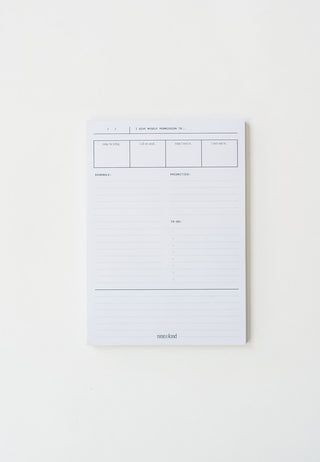


It's Sunday night and you're staring at your planner, pen in hand, ready to map out the week like this is the week you'll finally get it together.
Monday: Pack lunches the night before, respond to that work email you've been avoiding, maybe squeeze in a workout.
Tuesday: That parent-teacher conference at 4pm plus finishing your presentation that's due Wednesday.
Oh, and you will definitely meal prep on Wednesday night because Thursday is back-to-back meetings and someone's science project is due Friday.
You write it all down with the kind of optimism that can only exist on Sunday evening before reality has a chance to weigh in.
Cue Monday morning: You can't find anyone's shoes. The email sits unread because you were up twice during the night…Tuesday you realize the parent-teacher conference conflicts with a meeting you forgot about…By Wednesday you're eating cheese and crackers over the sink and calling it dinner.
This is what happens when we plan for a version of ourselves that doesn't account for the actual chaos of our lives.
The Problem: Planning From Capability Instead of Capacity
The weekly spread you keep trying to execute assumes you have consistent energy, predictable schedules, and the ability to pivot between all the hats you wear (mom, manager, friend, eldest daughter) without your brain needing a buffer. It assumes Tuesday-You has the same capacity as Monday-You, regardless of how much sleep you got or where you are in your cycle.
Most planning systems are designed for people who don't carry the mental load of an entire household while also trying to show up for their careers. They're built on the fantasy that you can control your time when half your day depends on other people's needs, schedules, and emotional states.
What if you planned for the week you're actually going to have instead of the week you wish you could have? Yes, that worst-case-scenario week, with the hope that margin makes itself known.
I'm not suggesting you abandon your goals or stop trying to take care of yourself. Perhaps we shift the prompt from "what should I do this week" to "what can I realistically handle this week given everything else that's already on my plate."
Because a realistic 60% week where you actually follow through feels a hell of a lot better than an overplanned 100% week that has you feeling like a failure by Tuesday afternoon.
Using the Burnout Bandwidth worksheet inside The Possibility Planner, we're going to work through what it means to establish an understanding of your baseline and how to plan accordingly.
Eldest Daughter Energy? Let’s Clock It
You know what nobody tells you about being the person everyone counts on? Eventually, you start planning like you're invincible.
You're adaptable, thoughtful, can overcompensate like no other...and that becomes the trap you fall into. Because 90% of the time, you can do the things (despite the great cost), so it makes sense that you would plan with that in mind. Your planner reflects your capability, not your capacity.
Here's what makes this so hard to change: Breaking from an identity as the reliable, capable, always-on-time, get-shit-done person sounds blissful in theory (oh, to never care again!), but the reality is that operating in a different way can feel really scary.
We lose our tangible ways of measuring worth. We have to learn how to delegate (uggghhh). We might actually have to get used to free time or this thing I hear about called "leisure."
The biggest thing of all? We might experience loneliness. Not only because we connect through helping others and doing all the things—we'll have to make time to connect outside of function and "just because." This means decision-making instead of urgency. Intention vs. obligation. And having to take ownership of it all.
All of these factors come into play when we learn how to plan based on our capacity instead of our capability.
The exhaustion you feel is because you're planning like your worth depends on your output and your nervous system is keeping score.
Why Traditional Advice Falls Short
All the advice you're hearing on Instagram or seeing from your friends? The concepts are great, but they lack nuance and the full understanding of what it's like to exist as you.
Time blocking doesn't consider the unplanned kid meltdowns or your boss's incompetence at downloading a PDF. Feeling empowered to reserve time sounds like a dream, and for some of us that reserved block would be the exact time a headache comes on. What we are needing is more margin and flexibility (and honestly, less on our plates).
Setting boundaries sounds like a set-it-and-forget-it process, but most of the time it's layered among various conversations and contexts. Many of the things we have to do are truly obligations (like making sure there is gas in the car) that can only be ignored for so long. Trying baby boundaries might be a more feasible option for our lives.
Morning routines and Self-Care Sundays fall into the same traps as the previous two—they can lack adaptability and easily overcomplicate themselves. We need easy-to-access rituals that can happen in a variety of places, ways, and times. I've seen a mom do a full skincare routine at school pickup, so it's possible.
A new productivity system takes time to build, maintain, and stress test. It might even make your already-stretched way of life "look" more feasible on paper. Color-coded time blocks are more focused on aesthetics than function.
Asking for help assumes we have an accessible village that can take our mental load away easily. Help is most definitely part of capacity planning, but we need to consider what it will take to get someone on board to be actual support, not just performative delegating.
When we think about what will actually work, it's less about the what and more about the how of it all. You might actually see some of this traditional advice in what we offer, but how we execute will be what gets you from planning solely on capability to honoring your capacity in a more organic way.
The Therapy Informed Solution: The Nine to Kind Burnout Baseline Worksheet
The Burnout Baseline Worksheet might be your compassionate call out that you needed. Since so many of us work within 2 gears (all in or checked out), seeing that we can do (or not do) tasks at various capacity levels just might hold us accountable in two ways.
When we're having urges to avoid as a way to "preserve" energy (I see you unloading dishes before work) or avoid discomfort (calling Comcast? I would rather not), noticing that we're at 70% might be that reminder to do the thing while the energy is higher. A post-avoiding-avoiding treat will be in order.
When our capacity is on the lower end, knowing our bandwidth will make us prioritize and slow down. I've never been a marathon runner...just sprinting or sitting. When I had to learn pace in order to run a mile in high school, it was painstakingly difficult because you had to be present. We are learning how to pace ourselves accordingly.
Our capacity is a resource, and treating it like currency is the best way to begin managing your bandwidth bank. Sometimes the bills are low, other times we get an unexpected change in pay. As we continue, try to be mindful of judgments and try to stay as objective as possible.
Understanding Your Bandwidth
So where is your baseline right now? Not last month's baseline, not next week's hopeful baseline—right now, this week, with everything that's actually on your plate.
What you need to understand is that baselines can only be measured by your personal experience. 100% for you might be very different from mine, and being honest with our capacity is important. There are several factors that contribute to (or impact) your baseline including:
Physical capacity:
-
Are you sick right now or feeling healthy?
-
Is your medication regimen effective? Are you being consistent?
-
How's your sleep?
-
Where are you in your cycle?
-
Are you managing any chronic illnesses/conditions?
-
Is the weather impacting your physical state?
-
Are you fed and hydrated?
Mental load:
-
What are you tracking right now?
-
How many humans (pets included) are you trying to keep alive or sane?
-
Who manages the day-to-day?
-
Are there any upcoming events you're anticipating?
-
Decisions? How many?
Emotional bandwidth:
-
What are you actively processing in therapy or self-reflection?
-
Are there specific relationships going through a rough patch?
-
What life changes are you experiencing?
-
How are you feeling about the world in general?
Environmental realities:
-
Do you have any support systems?
-
What areas in life have flexibility? What don't?
-
Are there any times that can be reclaimed for you?
-
What needs to be better managed (screen time, commute, etc.)?
-
Who's available this week versus who's traveling/unavailable?
Jot these down as you assess—you're building a snapshot of your current reality, not a comprehensive life audit.
How to Use the Percentage Scale
When translating this to the worksheet, I'd suggest starting with your professional life bandwidth because it tends to be more logistical and objective. What does your 40% work day look like versus your 80% work day? Once you've mapped that out, move to home life, relationships, self-care—the areas where capacity feels more emotional and harder to quantify.
For each percentage, you're going to write what you're capable of doing at that level. Think of it as cumulative—if unloading the dishwasher is possible at 40%, you can definitely still do it at 60%. You're not losing abilities as your bandwidth increases, you're adding capacity for more or harder tasks.
A quick guide for your range:
0% is the absolute bare minimum. Consider supports or offloading most tasks. Think of this when you're feeling unable to get out of bed or leave the house (for whatever reason). Brushing teeth might even be off the table. This is crisis mode, and that's okay to name.
20% is bare minimum 2.0. Think of this like you're able to fully shower, brush teeth, and make your way from the bed to the couch. You might be able to make food that's a bit more intensive (like cereal) over DoorDash. Kids might get screen time all day. You're present, but barely.
40% is moving into tackling responsibilities that are non-negotiable with the bar lowered. You might go to work but don't overcompensate. You're responding to emails but not volunteering for extra projects. Kids get fed, but it's scrambled eggs for dinner. The house gets messier and that's fine. You're showing up, but you're not showing off.
60% might be your starting point for your average bandwidth. Think about when you aren't at your best, but still able to get things done. You're managing work deadlines and getting kids to activities. The house isn't pristine but it's functional. You can handle one curveball, but not three. This is maintenance mode.
80% is a good day. You're able to stretch a bit more, take something on, and get a little creative. You might say yes to that volunteer request or actually meal prep. You have buffer for the unexpected. You're not just maintaining, you're advancing.
100% is a rarity, but that's the stars aligned, coffee hits right, I'm killin' it! You're firing on all cylinders, ideas are flowing, you're knocking things out and still have energy left. Enjoy it when it happens, but don't plan for it.
When you're laying this out, it's meant to be more about your daily rhythms and routines, so be mindful of getting in the weeds with the content. You're looking for patterns, not perfection. The goal is self-awareness, not self-judgment.
How to Actually Do This
You completing the worksheet will be the longest part of this process because it's setting up your scale for future use.
The Initial Setup vs. Weekly Check-In
Here's what most people don't realize: worksheets like this are meant to teach ourselves to naturally think with this framework in mind. After using this framework for some time, I now have an evolving awareness of my bandwidth and baseline. You're not doing this assessment forever—you're training your brain to think this way automatically.
The first time through (setting up your bandwidth scale) might take 30-45 minutes. You're defining what each percentage looks like across different areas of your life. That's the teaching phase.
Every week after that? 5-10 minutes max. You're just checking in, not rebuilding the system.
Your Weekly Bandwidth Check-In
Once you have the worksheet complete, here's what to ask yourself when reviewing or gaining a better idea of your current baseline for more intentional planning and committing.
-
Step 1: Review the current factors that may or may not be impacting your capacity (3-5 minutes)
-
Physical: Take stock of the past 24 hours and past week. How's your sleep been? Where are you in your cycle? Any illness, pain, or medication changes?
-
Mental Load: What's feeling heaviest? Is there anything you're anticipating? (The dentist appointment you keep forgetting to schedule? The birthday party you need to buy a gift for?)
-
Emotional: What's got you in your feels? Or is there something emotional you've been avoiding because you don't have the space?
-
Environmental: How accessible are supports in this moment? Is your partner traveling? Is childcare stable? Can you ask for help?
-
Step 2: Give yourself under 1 minute to decide your percentage (literally 60 seconds)
-
Past that, you're overthinking it. Your gut knows the answer. Trust it.
-
Step 3: Take your bandwidth worksheet and compare it to the week you have scheduled out (5 minutes)
-
Look at what's already on your calendar and ask:
-
What needs to change given my current bandwidth?
-
What do I have more capacity for right now?
-
What's getting crossed off or postponed?
-
Where do I need buffer time?
When to Do This
This is a process you can incorporate into your daily habits or as a way to take stock when feeling stuck.
-
Weekly rhythm (recommended starting point):
-
Sunday evening or Monday morning
-
Before you commit to anything new for the week
-
When you have 10 minutes of uninterrupted time
-
Daily check ins (once you're fluent in the framework):
-
Morning: Quick gut check—where's my bandwidth today?
-
Evening: Adjust tomorrow's plan based on how today actually went
-
Emergency check-ins (when you're feeling stuck or overwhelmed):
-
Anytime you're staring at your to-do list feeling paralyzed
-
When you're tempted to say yes to something but your body is screaming no
-
Mid-week when your original plan isn't working
Where to Do This
-
Find your uninterruptible spot:
-
Car in the parking lot before you go inside
-
Bathroom with the door locked (no shame, we've all been there)
-
Bedroom before everyone else is awake
-
Anywhere you can think for 10 minutes without someone needing something from you
-
What you need:
-
Your bandwidth worksheet (at least at first—eventually you'll internalize it)
-
Your planner or calendar
-
Honesty (this is the hardest part)
It Gets Easier
Eventually, this becomes second nature. You'll look at your week and automatically know "this is a 50% week" without running through the formal assessment. You'll decline commitments in real-time because you can feel your bandwidth without having to calculate it.
But you have to do the work up front. The worksheet trains your brain. The weekly check-ins build the habit. The consistent practice teaches you your patterns.
Real Talk: What You're Probably Thinking
Right now there's probably a fire lit under your butt that has you ready to be mindful, honor your capacity, and deal with the burdens of implementing change. Ride that high now because you and I both know that life will hit at some point. Learning to adopt this framework isn't always easy despite the potential benefits. In fact, it might feel more capacity draining to embrace. Just know that's part of the process.
As always when offering these suggestions and frameworks, this might not be for you. Feel free to honor what helps and leave what doesn't. What ultimately matters is you building a framework that keeps you from burning out.
Some things that might pop up for you:
"What if everyone expects me to be at 100% all the time?"
My friend, that is part of the problem. This might be where taking more microsteps to implement this or having a more in depth conversation with your circles makes the transition easier. What I would love for you is to be able to share your desire to change and have your people support you in the process.
That isn't the reality for many, so the work here is to become progressively more comfortable with disappointing others. Start small…say no to one volunteer request, skip one optional event, let one thing be good enough instead of perfect.
"This feels like lowering the bar or giving up on my ambition."
Ambition and goals are not dirty words. However, like anything, good things can be overused and no longer serve their purpose. Lowering the bar is what's happening in the short term, but in the long term you're actually building the likelihood of higher quality living and higher quality work. Rest is part of the process, and this framework puts more emphasis on that aspect.
"What if I have a low baseline all the time?"
First, let's acknowledge that a consistently low baseline isn't a moral failure. If you're consistently at 30-40% capacity, that is information about what's happening in your life right now.
If your baseline has been low for months (not just a hard season), it might be worth exploring what's underneath that with support. This could look like working with a therapist to process underlying beliefs, an executive functioning coach for neurodivergence support, a career coach if your job is the drain, or a doctor to check medications and physical health.
A consistently low baseline speaks to the chance that your current life setup might need bigger adjustments than a planning system can solve. That's okay and this worksheet can help you see that clearly so you know what support to seek.
"What if I'm wrong about my percentage? What if I'm just being lazy?"
Here's the thing: if you're worried about being lazy, you're probably not lazy. Lazy people don't stress about bandwidth assessments.
The distinction between "I'm avoiding because I'm lazy" and "I'm at low capacity" is this: avoidance usually comes with guilt and shame. Low capacity comes with exhaustion and depletion. If you're beating yourself up while not doing the thing, that's avoidance. If you're too tired to even beat yourself up, that's low capacity.
Trust your own assessment. You know your body and life better than anyone else. If you say you're at 40%, you're at 40%. You don't need to prove it to anyone.
"I don't have time."
Maybe the worksheet isn't for you but the concept is. Consider this: when you're going to the bathroom (gross but you're forced to be in a spot for a minute), ask yourself "what's my baseline?" and see what comes up. At first, this might feel inaccurate or you'll be unsure, but consistent check ins will increase your confidence in understanding your baseline.
Another option: you're already spending mental energy feeling guilty about your unfinished to do list. What if you redirected that energy into 60 seconds of honest assessment instead? You would likely walk away with a better plan for change and feeling less crappy about yourself.
The last thing I want is to suggest something that makes your life more stressful. Focus on effort and sustainability rather than completion.
You're allowed to plan for the life you actually have—the chaos, the interruptions, the fluctuating capacity. All of it gets to be part of your planning reality, not evidence that you're failing.
Your Next Step
This might feel like a pipe dream, but imagine adopting these principles next week and actually feeling the difference of planning with capacity in mind. Your body might gain longer-lasting rest, your mind has space to be creative, and your meals are actually enjoyed at the table instead of inhaled in front of your desk. All of this may not happen at once, but with ongoing effort could become your normal.
Still feel overwhelmed? For the next week, focus solely on taking inventory of your capacity percentages without a guide. Check in and see what your body tells you. Does 60% feel accurate? Does 80% feel like you're lying to yourself? From there, the worksheet and implementation might feel less daunting.
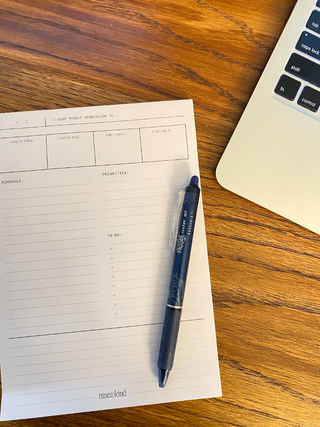
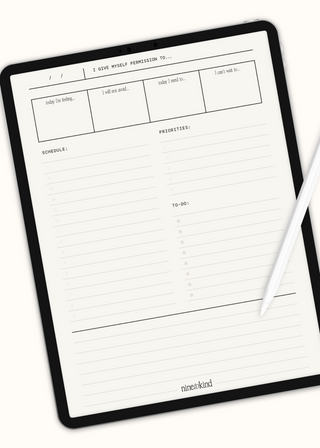
Want more tools like the Burnout Bandwidth worksheet? The Nine to Kind Possibility Planner has 10 therapy-backed tools to support your kinder life. Built by a therapist who gets it. No pressure. No guilt. Just space to breathe. Read more about the planner here!
The framework is free—you can start assessing your bandwidth on any piece of paper. But if you want the structure, prompts, and permission statements built in? That's what the planner is for.