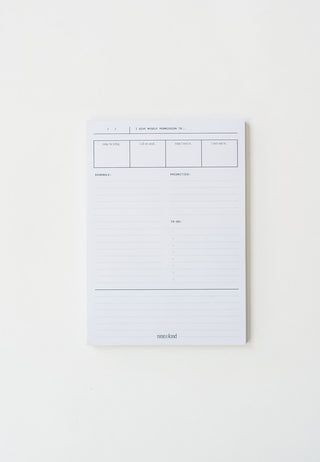


DOWNLOAD THE NINE TO KIND PLANNER AUDIT WORKSHEET |
Okay, I’m curious: Have you heard any of these phrases recently?
-
“You should slow down, you’re doing too much”
-
“I don’t know how you do it all”
-
“Wow you’re really busy”
And your immediate response goes something like this: "No shit Sherlock, I have way too much to do, everything feels important, and I don’t know what to take off my plate!"
It’s not like you want to feel this stressed out, in fact you likely want the opposite (sorry, but a beach vacation year round ain’t happening).
-
You are overwhelmed because you are likely doing too much (duh!).
-
Your bare minimum is likely someone else’s top tier work.
This way of operating needs to change, and I know the starting point can feel overwhelming to find. But don’t worry, that’s exactly why I created this blog post all about how to audit your planner so that you can make better decisions that fit into your busy life.
Planner Audit Reality: Less is More (And no, it’s not that simple)
I know that getting to a place of "less" is more difficult than working toward "more" because it involves so much nuance and middle ground. Because much of your life involves good intentions that become obligations, commitments you used to enjoy but outgrew, and activities you keep doing because you "should."
In this week’s post, we are using the Nine to Kind Planner Audit as our framework for editing your to-do list so that you can:
-
Identify what is overwhelming you
-
Find overfunctioning red flags
-
Clarify what depletes energy vs giving back bandwidth
-
Choose what’s truly important and reclaim space on your calendar
Get your copy of The Nine to Kind Planner Audit HERE
What you need: the worksheet, access to your calendar/to do list/planner that has information from the past 2-4 weeks, pen + paper for notes
Don’t worry I will include a link to this blog in the email with your Audit worksheet.

Hi! I’m Lauren, Therapist + Creator of Nine to Kind. I believe planners shouldn’t make you feel like sh*t because I know you’re already doing the most!
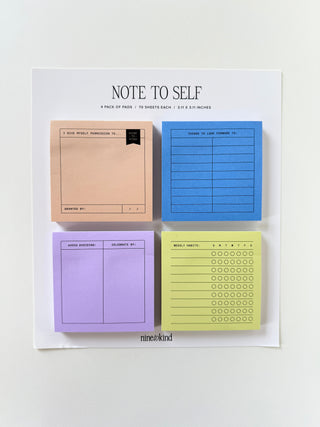
Nine to Kind started as a planner, but now has expanded into events (like Admin Night), notepads, Substack content and a weekly newsletter. We are politely rebelling against productivity guilt by creating systems and mindsets that prioritize care over output. Our content isn’t about planning, but creating a kinder life for ourselves. Sound good?
Your 5 Step Planner Audit Using the Nine to Kind Framework
Step 1: Review the past 2-4 weeks and identify what is overwhelming you.
When we think about task and capacity management, we consider only eliminating what we don’t want on our plate. But our capacity isn’t only impacted by the stuff that stresses us out, but also things that excite us! Before we clearly identify capacity contributors and energy drainers, we need more info on how these tasks got on our calendars:
-
How much of your time was spent on tasks for others vs tasks for yourself?
-
What tasks/events were responsive or a reaction vs proactively planned?
-
What tasks/events/time felt like an autonomous choice or lacked a feeling of choice?
-
Name 1-3 feelings while reviewing your schedule
For the moment, don’t dig too deep because the next steps will refine and better identify what contributes or takes away your capacity/bandwidth. Use more of a scientist's perspective and write your answers in a factual data driven format.
Step 2: Check for overfunctioning red flags.
Everything you do is an attempt to support you in some way…yes reviewing the email 5 times before sending might be your way of ensuring you keep your job. The intensity of your overfunctioning might not make sense if you deeply review each email.
Look for things that seem to be harmless, one-offs, or obligation driven like:
- Back-to-back meetings or stacked appointments
- Long to do lists that rarely get fully crossed off
- Frequent last minute rescheduling or “fitting people in"
- Absence of open, unscheduled blocks for rest or reflection
- Overcommitment or double booking
-
Note any repeating patterns or specific areas of overwhelm
Step 3: Identify capacity contributors and energy drainers.
Remember, everything (good or bad) impacts your capacity.
However, there are some things that offer immediate reciprocity meaning that they contribute positively to our capacity. The high energy draining commute might take you to a job that offers a sense of purpose, therefore contributing to capacity building.
-
Write out specific tasks
-
Next to each task you’re going to make notes of what was depleting or contributed
-
Make note of what might be an unhelpful way of coping
Example:
-
Solo morning routine: losing sleep depletes me but time alone gives me energy
-
Getting kids ready for the day: I enjoy seeing my kids but the process drains me
-
Lunch with X: Felt like an obligation so I felt bad before going and worse after
-
Coffee meeting with Y: Required for my mentorship program, drain/contribute depends
-
Birthday party drop off: Low lift as long as I keep my boundaries
-
Laundry: Drains me everytime
Compassionate honesty is needed when considering the context of these tasks. This helps with identifying what can actually come off the plate or shift to be more of a capacity contributor.
Step 4: Accept that you can’t do it all and choose what comes off
-
Identify what can be delegated (even if not all the time)
-
Pick what situations could shift (ex: Ask mentor for a phone call instead of an in person coffee every now and then)
-
Take off tasks that people would not notice the change (ex: Using laundry service for sheets, towels and workout clothes)
-
Commit to less obligation driven events/tasks
Step 5: Reclaim time proactively
-
Pre-schedule nothing time and protect it!
-
Attempt to have one day that is event or obligation free (or a set half day)
-
Mark off non-essential tasks and consider how much time you will gain (ex: 5 minute email reviews, 10 emails equals almost one hour of time a day)
You may notice that the reflection and auditing takes more time than the decision making and that is by design. Going deeper when auditing gives you context and information to make quicker and more intentional decisions. If you find yourself stuck on a decision, consider brainstorming options instead of this or that.
What to Do If This Process is Overwhelming
To be really f*cking honest, it’s probably going to be the first few times. But once you use the planner audit framework a few times, the hope is that these questions will come up in the moment or as you look at your planner/calendar.
Because knowing your patterns, what drains or supports your bandwidth, and honestly acknowledging what matches your values, goals, and context of life helps you make self guided choices!
This doesn’t mean the shifts and editing come without discomfort or pushback. That’s guaranteed to happen. However, by routinely auditing your schedule and learning how to zoom out every month…the capacity you gain can support those new but uncomfortable shifts you may have to make.
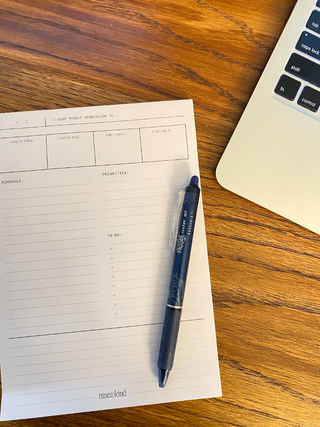
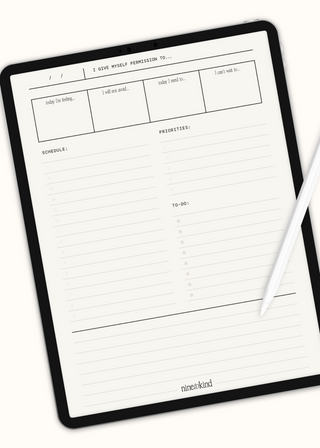
Did the prompts help you gain clarity? Check out the Daily Planning Notepad for mindfulness + prioritization prompts.
After you complete the audit, find us on Instagram and let us know what is coming off your plate! We would love to celebrate with you.