
Have you been feeling burned out but not crispy? You know that moment where you feel fatigue but not exhausted, overwhelmed but managing, frustration but not angry? We often tackle burnout when it is at its highest, often forgetting that we can intervene when the burnout symptoms begin.
In this week’s blog, we will walk through a few signs that your burnout may be creeping in quietly and I will share the 5 tiny (but powerful) shifts I rely on to stay grounded through the busiest seasons.

Hi! I’m Lauren, Therapist + Creator of Nine to Kind. I believe planners shouldn’t make you feel like sh*t because I know you’re already doing the most!
Nine to Kind started as a planner, but now has expanded into events (like Admin Night), notepads, Substack content and a weekly newsletter. We are politely rebelling against productivity guilt by creating systems and mindsets that prioritize care over output. Our content isn’t about planning, but creating a kinder life for ourselves. Sound good?
How I Knew I was Entering Burnout
Spring tends to be my busiest season, which usually sets the stage for a full-on burnout episode (typically around my birthday which is majorly inconvenient). This year, I could already feel the anticipation building in my body as we got back from Spring Break and the weather started to shift. I knew burnout season was coming, and this time, I wanted to get ahead of it.
You might think this would require a major life overhaul… but honestly, what I needed was to go smaller. Much smaller. I had to get granular and figure out which tiny wellness habits were going to support me through the chaos. Why smaller? Because burnout is a buildup…not a sudden event. And it is possible to intervene while it’s still a low simmer rather than a full flame.
Signs You Are Entering Burnout Territory
Why do we treat our emotional state like some mythical, untouchable force that can’t be taken care of practically?
I’ve often described burnout (along with depression, anxiety, and other emotional states) as emotional colds—not because they’re minor, but because once we begin to understand how our bodies and brains respond to stress, we can approach them with the same mindset we would a cold: recognize the signs, support the system, and adjust accordingly.
To build on that analogy, some of us have what I call an “allergy” to overwhelm. We’re more susceptible to chronic stress, so our self-care can’t just be reactive, it needs to be ongoing and preventative.
Common Signs That Burnout Is Building:
-
Physical exhaustion (even after rest)
-
Mental fatigue or brain fog
-
Irritability, snapping, or chronic cynicism
-
Loss of interest, motivation, or hope
-
The urge to shut down or isolate
-
Over-controlling and over-planning
-
Forgetfulness or spacing out
-
Headaches, body aches, or tension
-
Constant complaining without seeking resolution
-
Withdrawing from others or refusing to express needs
We all have different nervous systems, patterns, and thresholds—so your signs might look a little different or show up faster. The goal here isn’t to pathologize… it’s to observe. When we can name what’s happening objectively, we can reduce the shame spiral that often makes burnout worse.
For me? Burnout starts when my brain feels “full” and my executive functioning tanks. Basic tasks—like unloading the dishwasher—start to feel overwhelming. My thoughts go fatalistic (“Everyone hates me,” “I’m going to fail”), and I physically feel it in my body: nausea, low energy, the urge to hide.
The more clearly I can describe my symptoms, the more clearly I can support myself. This level of self-awareness is what makes my burnout management plan actually work.
My Top 5 Tiny (But Mighty) Self Care Habits to Prevent Burnout
I wanted to highlight the go-to coping skills I lean on to prevent burnout because when things feel like a lot, going back to the basics is usually the most effective strategy.
Here’s the thing: your problems may be complex, layered, and totally valid… but your solutions don’t always have to be. In fact, simple, consistent practices are the ones that actually support us day-to-day. They help us stay on track—or gently guide us back when we’re already off the rails.
The habits I’m sharing below aren’t glamorous, but they’re foundational. These are the small, repeatable practices I use regularly as part of my ongoing stress maintenance, especially during high-demand seasons.
Want a deeper dive into burnout and your unique signs or patterns?
Habit 1: Each Morning Drink a Glass of Water Before Coffee
Did you know that dehydration can mimic the symptoms of anxiety? Brain fog, dry mouth, increased heart rate, dizziness...they’re all things that can happen when your body’s simply asking for water.
I started noticing that after my morning coffee, I’d feel more jittery and rushed—not energized. So I tried something simple: drinking a glass of water before my coffee. (Bonus: eating something before coffee helps too.) The shift was almost immediate. I still got the boost from caffeine but without the side of chaos.
We all know we “should” drink more water. But starting the day with just one glass builds momentum for better hydration and supports your nervous system from the moment you wake up.
Try this: Keep a glass or bottle of water in a place you naturally pass through in the morning (your nightstand, next to your coffee maker or on your bathroom counter) as a built-in visual cue.
Habit 2: Snacks On Demand
Growing up, I used to tease my dad for being “hangry” and constantly needing a snack. Turns out…that need for frequent nourishment runs in the family.
Over time, I realized that relying solely on my three main meals wasn’t cutting it. My energy dipped, my mood got sharp, and I’d find myself pushing through hunger instead of supporting it. So I started being more intentional about planned snacks: keeping food accessible at my office, in my bag, and basically anywhere I spend time.
Yes, I do feel like a toddler sometimes…but giving myself permission to eat when my body needs it has created a much less irritable, much more grounded version of myself.
Try this: Stock a few staples in places you spend the most time. Think “pantry” and “fridge” options for your office, and something portable for your bag.
Some of my go to staples:
-
Office Fridge/Pantry: hummus, pretzels, overnight oats, oatmeal packets, carrots, salami
-
In My Purse: Made Good granola bites, protein bar, chicken jerky
The goal is nourishment that’s realistic.
Habit 3: Daily Emotional Check In

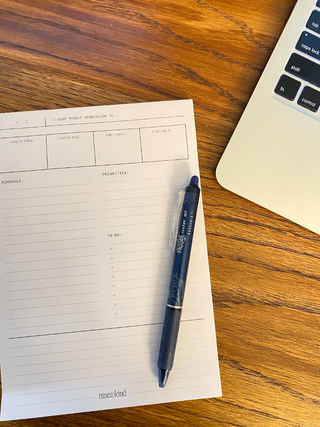
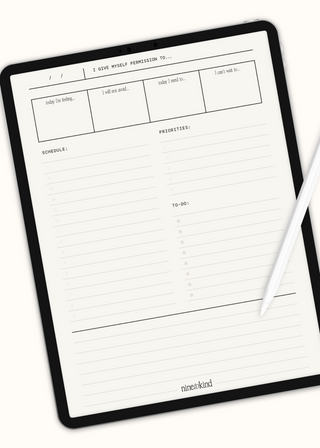
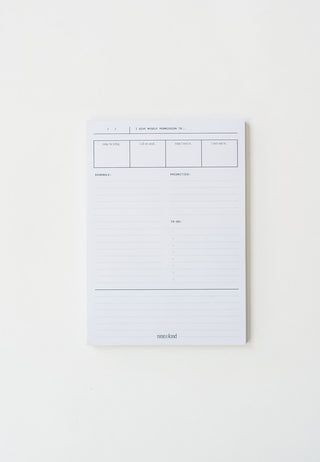
I created the Nine to Kind Daily Notepad because I needed a way to actually hear myself each day. Life moves so fast that we often store emotional data and information without even realizing it.
You’ve probably had that moment when someone casually asks, “How are you?” and suddenly you freeze or you fall apart. That response isn’t random. It’s your threat system reacting to disconnection from yourself.
When we don’t check in with ourselves regularly, our bodies and brains start reacting without context. But when we build even a little emotional awareness, we give ourselves a sense of safety and choice throughout the day.
Try this: Set a reminder in your phone for 10am and 4pm, just a gentle cue to pause for 2–3 minutes.
Ask yourself:
-
“How am I feeling right now?”
-
“Is there a need I could meet or a small way to get support today?”
This simple check in helps you shift from running on autopilot to responding with intention. Tiny habit. Big shift.
Habit 4: Let The Light (And The Air) In
Listen, I get it. As a therapist, I’ve also suggested a walk to clients who are feeling low and I’ve also rolled my eyes at myself for doing it. It feels way too simple to be effective. But here’s the kicker: it works. It works really well.
What’s shifted the most for me is lowering the bar (like setting it on the ground level) when it comes to movement. Parking a little farther away, doing a quick loop around the block, or even just stepping outside for two minutes can genuinely reset my system when burnout is building.
When I can’t get out? I try to keep the curtains open longer and crack a window for at least 30 minutes. Fresh air, natural light, and the act of shifting my environment helps way more than I want to admit.
Try this: Next time you make a coffee date with a friend, skip the sit down! Suggest picking it up to go and walking around a nearby park instead. Movement + connection + light? That’s a triple win.
Habit 5: Review My Planner Early and Often
There was a time when my planner was more of a cute accessory than a functional tool. I would jot things down with the best of intentions but… never really looked at it again.
What I didn’t realize was that all that mental rehashing (the constant trying to remember what was coming up) was quietly draining my energy. I was using bandwidth I needed elsewhere, just to keep things straight in my head. Despite all the effort, I was still missing deadlines and showing up to things frazzled.

Now, my planner review is a non-negotiable rhythm in my week.
-
Monthly layouts hold the big picture: novel or unusual events, appointments, or travel.
-
Daily layouts break things down hour by hour so I can actually pace myself.
-
Each week, I check in with both to make sure my time makes sense and to schedule in breaks like they are appointments (because they are).
Try this: Do a midweek planner review. Look over the rest of this week and peek at the next. Ask: “Where can I claim some time for myself—before life fills it for me?”
Need a template for your audit? Read this BLOG that walks you through the Nine to Kind Planner Audit!
Have Your Own Back My Friend
Burnout management doesn’t have to be dramatic or over the top. What it does need to be is consistent and intentional. Every habit on this list might seem small, but together they become radical acts of self compassion: nudging us to slow down, care for ourselves, and acknowledge our own humanity in the process.
Consider this: even computers need to reboot. Why would we be any different?
The upside is that you’re probably already doing one or two of these things. The next step is to add a little more intentionality. Make sure these habits are actually meeting your current needs and be willing to tweak them as your life shifts.
Like most of burnout recovery, this is an ongoing experiment in what works for you. Give yourself permission time to have your own back.
Want a tool to help you build in these tiny resets with less mental effort?
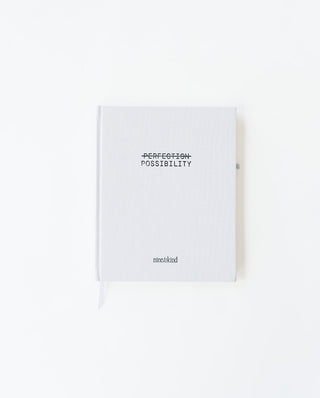
The Nine to Kind Possibility Planner and Daily Notepad were designed to support you.
Complete with compassionate habit trackers, space for notes, and gentle check in prompts. Take a peek in the shop you might just find your new favorite support system.