

Thanks to meme culture’s polite rebellion of self optimization, us procrastinators have developed somewhat of a toxic connection with the behavior. The immediate gratification of putting that thing off quickly wears off and gets replaced with the shame of repeating the patterns we say we would break (tomorrow). We feel part of a club, this gaggle of people all searching for the same thing (the thing being done).
The cycle goes a bit like this: ambitious planning ➡ life gets busy ➡ overwhelm comes in ➡ we start to shut down ➡ things like deadlines force us to work ➡ other things get put off
Cue the emotions of self criticism, self loathing, and shame.
Instead of getting curious about what’s going on in this ongoing cycle, we chalk it up to being lazy, poor with time, or unmotivated. Once we label it as such, our procrastination then evolves into a self criticism spiral or remains a focus until we actually face it head on. The cycle either gets ignored or temporarily tackled, then we move on for the moment.
The Main Thing That The Inner Critic Misses About Procrastination
Procrastination doesn’t get credit for what it can actually be for us. Procrastination can be a truth teller, highlighting our actual capacity, acknowledging our lack of information, and forcing ourselves to decide if it’s truly worth it to us or not.
A lot of times we have to avoid-avoiding as a means of survival. The things haunting us at night aren’t these major life decisions, they are the appointments unmade, errands waiting to be forced, and doom piles waiting to be in our way.
Why are we not giving our procrastination the benefit of the doubt? If we want to approach our procrastination with compassion, we need to know what it is trying to tell us.
Giving procrastination the space and curiosity is the first step to quieting the inner critic and learning how to approach our life with self kindness. Turns out, we can lessen our procrastination habits without beating ourselves up in the process!

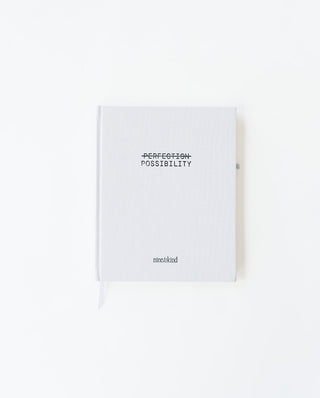
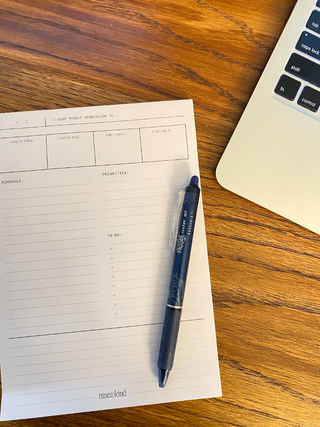
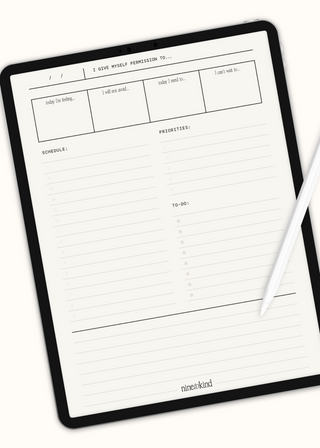
Hi! I’m Lauren, Therapist + Creator of Nine to Kind. I believe planners shouldn’t make you feel like sh*t because I know you’re already doing the most!
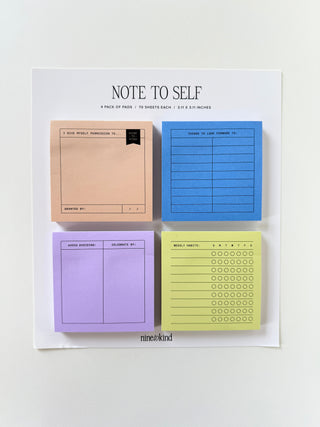
Nine to Kind started as a planner, but now has expanded into events (like Admin Night), notepads, Substack content and a weekly newsletter. We are politely rebelling against productivity guilt by creating systems and mindsets that prioritize care over output. Our content isn’t about planning, but creating a kinder life for ourselves. Sound good?
If procrastination isn’t the enemy, here’s what it might be trying to tell us…
Procrastination Message #1: You are pushing too hard and need to take a step back.
Overthinkers + Overdoers are notorious for pushing and pushing until we hit a wall. When we are forcing an answer or first step, the relentlessness actually creates more friction. Consider taking a break with the intention of returning to the task at hand.
What To Do With That Feeling: Do something completely unrelated like taking a walk, showering, cooking and let the mind wander. The more tedious the task the better. See what shower thoughts come up for you!
Procrastination Message #2: The task you’re doing is not aligned nor as urgent as you think.
Manufactured urgency is a hell of a drug…and many of us struggle to operate without it. It’s worth considering if the push is coming from an altruistic place or from shoulds or obligation. Does it really need to be done? Take a minute to consider.
What To Do With That Feeling: Imagine someone else doing the thing and getting credit for it. Do you feel any attachment? If not, the task is likely misaligned. On the other hand, imagine yourself not doing the task at all…feel upset? If not it is likely not urgent.
Procrastination Message #3: You need more support than you realize.
I know asking for, counting on, and receiving help is not the easiest for those with eldest daughter energy. However, if a task keeps falling back it might be worth experimenting with delegation, accountability, or encouragement.
What To Do With That Feeling: Start with sharing your frustrations with a task and see if your people can validate. If needing more of a push ask someone for a check in or a facetime body doubling session. Still feel stuck? Let someone else take a go at the task.
Procrastination Message #4:Clarity is lacking.
Do you actually know what needs to be done? Yes we are expert mind readers and are known for anticipating the needs of others. With that skill also comes the ability to overcomplicate or assume. Seek out more information and get clarification on what is top priority.
What To Do With That Feeling: When seeking the information considering giving the other party options (if getting instructions from someone else) ex: Do you want X or Y done by tomorrow. Don’t be afraid to ask the “dumb question” because that answer might unlock your direction to get the thing done.
Procrastination Message #5: Expectations are unreasonable and need to be reconsidered.
Your baseline is someone’s best work. If you haven’t considered what “good enough” means for you…now is the time. Also consider if your expectations on the tasks are reasonable and if you have set yourself up for success.
What To Do With That Feeling: To actually stick with a good enough action you will need to engage in a lot of both/and talk. For example: Turning this form in late is embarrassing AND I know I am not the first one to forget. This also helps with distress tolerance, speaking of which…
Procrastination Message #6: Your tolerance for discomfort needs some improvement.
Procrastination is not comfortable but it is familiar. That familiarity surpasses the unknown of failing, rejection, or shame for not getting the thing done sooner. Focus on easing tension within your body and engage in neutral or positive affirmations.
What to Do With That Feeling: Take note of what feels most familiar about this form of procrastination and refocus on the the other side of the discomfort.
Procrastination Message #7: You’re waiting on motivation, momentum, or something to be fully on fire to take action.
This one is a sticky situation! It can feel like more work to motivate yourself when none is there, AND we can’t always have that motivation on demand. Give yourself 5-15 minutes to start a small part of the project before shifting another direction.
What To Do With That Feeling: Feeling stuck but have options on what to do first? Use a coin toss to choose the next best step.
Procrastination Message #8: You’re overcommitted or are more focused on making everyone else happy.
The phone rings and your friend needs to be picked up from the auto shop…an hour away. You hop up and drive without even thinking about it. Being the reliable one is a great excuse that we use to justify our delay. Be mindful of people pleasing and using requests as excuses to avoid.
What To Do With That Feeling: Force yourself to take 3-12 hours before committing to someone else and their request. This is where that compassionate accountability can come in too–tell your friends that you need to practice saying no until your task is done!
Procrastination Message #9: You need to know if there are options.
When overwhelmed we can go into all or nothing thinking and feeling like there is either do the thing or don’t do the thing. Can things be broken down? Is there a better option? This is similar to the forcing concept, but different in that the goal is to brainstorm options in the moment instead of pausing.
What To Do With That Feeling: When brainstorming allow yourself to be as extreme as possible. There is no option too wild! Editing can happen after that.
Coping With Procrastination Myth: Self Compassion Is NOT a Pass
Getting to understand your procrastination is not a hall pass to stay on your bullshit. Self Compassion is the way to begin having some of your worst habits actually work in your favor and begin to serve you.
Your nervous system deserves a break from constant masking, criticism, and nagging to get the thing done. It needs a kinder approach that says “you know what you’re doing isn’t helping you and we are going to work together.”
If we want to truly change the narratives in our mind, we have to start by giving it new material to take in. We need to show that challenging procrastination doesn’t have to be the hardest thing ever, and give our nervous system the promise that we will honor its limits.
Avoiding Avoiding is already uncomfortable, bringing levity to the process makes the already shitty process a lot less shitty. There is value in making things suck just a little bit less.